The Intergovernmental Panel on Climate Change (IPCC) is the leading international body for the assessment of climate change. The IPCC reviews and assesses the most recent scientific, technical and socio-economic information produced worldwide relevant to the understanding of climate change. It does not conduct any research nor does it monitor climate related data or parameters. Thousands of scientists from all over the world contribute to the work of the IPCC. Review is an essential part of the IPCC process, to ensure an objective and complete assessment of current information. IPCC aims to reflect a range of views and expertise.
During this cycle, the Panel has produced three Special Reports, a Methodology Report on national greenhouse gas inventories and the Sixth Assessment Report.
The Synthesis Report for the Sixth Assessment Report will be approved at the 58th Session of the IPCC which will took place in Switzerland from 13-17 March 2023.
It provides an integrated view of climate change as the final part of the AR6. The AR6 Synthesis Report document will consist of two parts: (a) a Summary for Policymakers
of up to 10 pages and (b) a Longer Report of up to 50 pages.
The Working Group I contribution to the Sixth Assessment Report addresses the most up-to-date physical understanding of the climate system and climate change, bringing together the latest advances in climate science.
The Working Group II contribution to the Sixth Assessment Report assesses the impacts of climate change, looking at ecosystems, biodiversity, and human communities at global and regional levels. It also reviews vulnerabilities and the capacities and limits of the natural world and human societies to adapt to climate change.
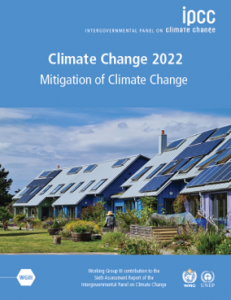
The Working Group III report provides an updated global assessment of climate change mitigation progress and pledges, and examines the sources of global emissions. It explains developments in emission reduction and mitigation efforts, assessing the impact of national climate pledges in relation to long-term emissions goals.